

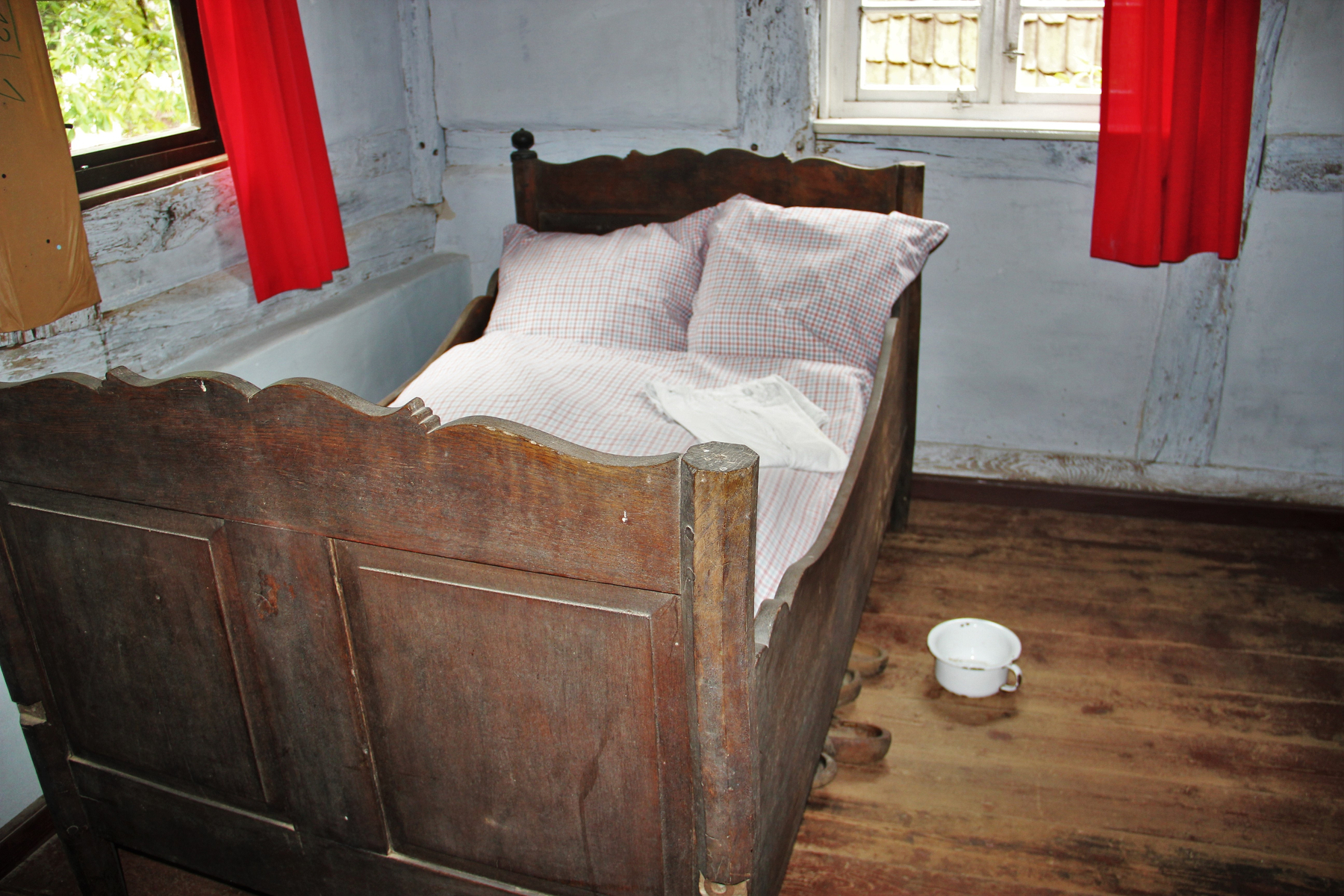
A lot of what passes for media today isn’t a search for the truth. It’s a story written in advance, with real people cut to fit it.
Before my transition, I was a Republican. I listened to a lot of talk radio, and I wasn’t just a casual listener. I was a fanatic: Rush Limbaugh, Mike Pence and Dave “the King” Wilson on WIBC. I was a full-on Dittohead, as Rush’s fans called themselves. My job had me in the car during Rush’s show, or somewhere I could have him on, so I got years of those three hours.
I’ve dug through Rush’s archives looking for one segment and can’t find it, so take this as memory, not a quote. He once explained why he rarely had guests. He compared his show to an NFL game, and he was the referee. He made the rules. He decided which caller got on. The whole thing was built so his points would hit.
A real referee doesn’t know the final score. Rush did. The calls, the callers and the clock were all there to get him to a result decided before kickoff. That isn’t a game. It’s pro wrestling with a news desk.
The bed
There’s a Greek myth about a bandit named Procrustes. He offered travelers a bed for the night, and if they were too short, he stretched them to fit. If they were too long, he cut off their legs.
The bed never changes. The guest does.
That’s what I want to talk about. Not one host or one outlet, but a way of doing media where the story gets written first and the people in it are cut to fit.
You are the product
Rush called himself “talent on loan from God” and bragged that he was “documented to be almost always right 99.8% of the time.” That isn’t a claim about facts. It’s a claim about authority. Confidence was the product.
And the audience? We were what got sold. In 1996, Noam Chomsky told Andrew Marr on the BBC that the media’s market is advertisers and its product is audiences. I wasn’t just listening to Rush. I was being sold to his sponsors, fed what I already believed, and coming back hungrier.
No villain required
Here’s the part people miss. This doesn’t need a conspiracy. Marr pushed back on Chomsky: was he saying journalists like Marr were censoring themselves? Chomsky’s answer:
“I’m sure you believe everything you’re saying. But what I’m saying is that if you believed something different, you wouldn’t be sitting where you’re sitting.”
The system doesn’t need people to lie. It filters for people who already fit the story and promotes them. Marr was sincere. I’d bet most of the journalists I’m about to talk about were too. That’s what makes it work.
The guest on the bed
A while back, I listened to an episode of Somebody You Love, a podcast by two Australian sex workers, Jenna Love and Holly Hart. Jenna told two stories that are the clearest example of the bed I’ve ever heard.
In 2020, she was interviewed about sex workers having to move online during COVID. She keeps spreadsheets. Before COVID, at most 20% of her income came from online work, so when in-person work stopped, she lost about 80% of her income overnight. The article said she’d “reinvented herself… doubling her business.” It also put quotes in her mouth that she says she never said, in phrasing that wasn’t hers. She went through it with a highlighter, and about three-quarters of the page came out yellow.
The second time, a publication that sells itself as being for women asked her to write her own piece. When they asked what she earned, she told them she wasn’t comfortable giving a number and didn’t want a made-up one either. The social media card went out anyway: her photo, and “I earn $10,000 a week” in quotation marks. Her actual words were behind a paywall. The invented number was free for anyone to see. When she commented to correct it, she says her comment was hidden. The outlet blamed automatic filters.
In both cases the fact didn’t fit, so the fact changed. Jenna wasn’t a source. She was a costume. They needed a real name and a real face, and the story supplied the words.
People keep telling her to do media training. Media training teaches you to choose your words carefully. It can’t help when your words aren’t the ones that get printed.
The trap
Jenna also named the trap, and it’s the part that hit me hardest. If you say no to the interview, they don’t drop the story. They find someone who’ll play the part, usually someone with less experience and less support. So you say yes for damage control, and your yes becomes their proof that they were fair.
Trans people usually don’t even get that choice. A lot of the time, they talk about us and never with us. And when we do get a seat, it’s often on a panel with three people who think we shouldn’t exist.
The disability rights movement gave us the line “nothing about us without us.” Most of the time, what we get is about us, without us. When we’re let in, it’s about us, with us, but only as cast. The minority gets a speaking part, and the lines are already written.
The bed at scale
Rush needed a call screener. The apps don’t. The algorithm learns which “callers” keep you on and serves you more of them. It distills people’s ideas into feelings, groups those people together and keeps them engaging, with no fact-finding and no search for truth or meaning. Engagement for the sake of the app’s growth, not for anything society gains.
To be fair, the research is messier than “the algorithm radicalized everyone.” Large studies Meta ran with outside researchers during the 2020 election found that changing people’s feeds changed what they saw, but didn’t measurably change how polarized they were. The machine didn’t invent our divisions. It finds them, feeds them and sells them. That’s the business model Chomsky described, automated and running 24 hours a day.
Why the bed works
The machine isn’t just exploiting our biases. It runs on them.
Repetition feels like truth. Psychologists have known since the 1970s about the “illusory truth effect”: the more often you hear a claim, the truer it feels (Hasher, Goldstein & Toppino, 1977). Rush was on three hours a day, five days a week. The repetition was the point.
Corrections don’t fully undo the damage. Researchers call it the “continued influence effect.” Even after people accept that a claim was wrong, it keeps shaping how they think about the story (Johnson & Seifert, 1994). The outlet took down Jenna’s $10,000 card after about 20 hours. The number didn’t come down with it.
We protect our team, not our facts. Dan Kahan’s work at Yale on “identity-protective cognition” found that people reject evidence that threatens the group they belong to. The machine doesn’t sort us by ideas. It sorts us by tribe.
Here’s the good news. The famous “backfire effect,” the idea that correcting someone makes them dig in harder, mostly hasn’t held up. Larger follow-up studies found people generally do move toward the facts when corrected. Facts aren’t useless. They’re just slow, and the machine is fast.
And what actually changes minds looks nothing like the machine. In 2016, researchers in Miami sent canvassers door to door for roughly 10-minute conversations about trans rights. They didn’t lecture. They asked people about their own experiences of being judged, and they listened. Transphobia dropped, and it was still lower three months later.
I learned that first-hand when I canvassed door to door for the Obama campaign in 2008, and later that year I was a delegate to the Democratic National Convention in Denver. A conversation on someone’s doorstep did more than any debate ever could. When people actually got to know me as a trans person, minds changed in a way no argument ever managed.
I’ve seen it in my own life, too. It’s a lot harder to hate trans people when you actually like one of us.
Real people and real experience. That’s the one thing the bed can’t fake.
How I got off the bed
From 1995 to 1996 I worked as a phlebotomist, driving around Indiana to nursing homes. In the car, I’d listen to The Mike Pence Show on WIBC. This was before Congress, before governor, before vice president. Back then he was a local conservative talk radio host, and I was a fan.
What I saw in those nursing homes was grim, and it was consistent. Residents left sitting in their own waste. Buildings so neglected that when you flipped on a light, cockroaches scattered.
One day Pence talked about a bill heading to the legislature to regulate the nursing home industry. He sided with the industry. So I emailed him. I told him what I’d seen with my own eyes and that what he was saying wasn’t true.
He sent back a short, curt reply. As a whole, he said, the industry wasn’t like that.
A few weeks later, I heard an ad on his show. It was paid for by the nursing home industry.
Nobody fact-checked me out of conservatism. I saw it. I brought one of my own heroes the facts, the facts didn’t fit, and they got cut. That’s when I finally understood whose bed I’d been lying in.
I’m not against theater
I love stagecraft when it brings truth to a topic. A play can tell you something true that a spreadsheet can’t. I’ve used a running image in this very post.
The difference is the test: what happens when a fact doesn’t fit? A truth-teller changes the story. This machine changes the fact.
Sleeping elsewhere
Media literacy helps. Notice when you’re being fitted. When a story makes you feel exactly what you already felt, that’s the bed. When a headline tells you everything about people you’ve never heard speak for themselves, ask whether anyone actually asked them. And every time a host, a headline or a feed tells you how to feel, ask the one question it can’t survive: what happens when a fact doesn’t fit?
But I don’t think that’s enough on its own. You can’t out-think a machine that studies you full time.
So I’m not on their bed anymore. My home is the internet before the algorithm: RSS feeds, blogs, chronological timelines, my own website, PeerTube and the fediverse, where nobody’s ranking what I see to keep me scrolling. When I do post on the big platforms, it’s POSSE: Publish on your Own Site, Syndicate Elsewhere. The original lives here. They just get copies. And that’s how it’ll stay until all that shit is dead.
It won’t get rid of the Rushes of the world; he was on the radio long before any of this. But it takes the call screener out of a company’s hands and puts it back in mine.
I pick my own callers now.
They made their bed. I don’t have to sleep in it.
