
A lesbian writer who used to be a mutual of mine on several social media sites back in the 2000s turned up in a Gmail search. (I’m currently going through gigabytes of old emails and mass-deleting in preparation for shutting the account down entirely.) Curious, since I hadn’t heard that name in years, I looked up her socials. What do you know: TERF. “Why I’m Not Going to Pride” posts, complete with mentions of trans people and other queers as the reason why. Shocker.
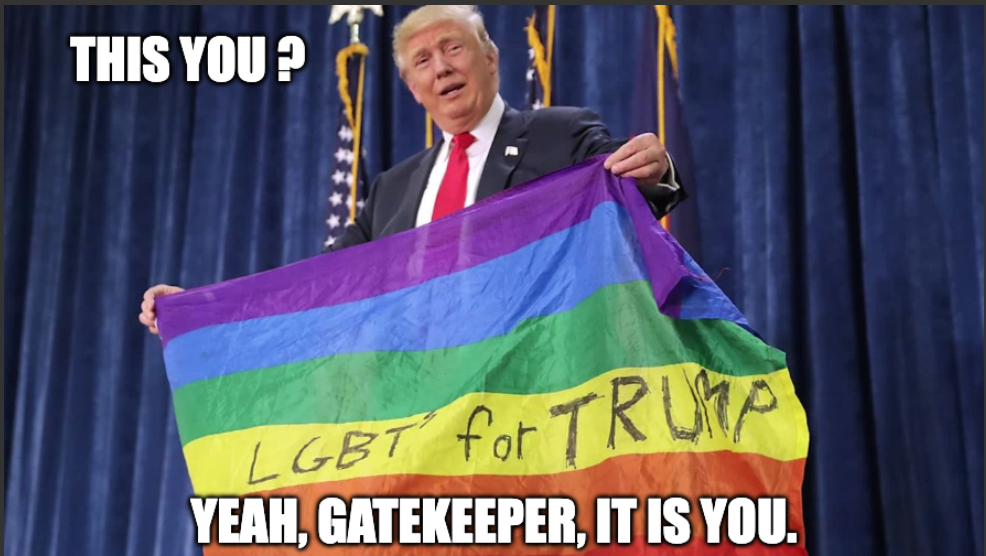
On that note, I’m tired of people who center themselves as the definition of an identity and then gatekeep everyone else out of it. The last few days, the target has been lesbians. One person claimed that “real” lesbianism means never having been attracted to a person of the opposite sex, ever, and that people in twenty-year WLW relationships aren’t lesbians in that context if they were previously in a heterosexual relationship. What in the unholy gold-star-lesbian hell is this? Gatekeeping identity is ignorant. Y’all sound like the conservatives you marched in Pride to counterprotest.
Maybe it’s because I grew into my queerness around the foundational idea of the trans umbrella that I have a wider picture of what community boundaries — and gatekeeping them — actually entails. Maybe it’s because, even though my gender identity is fairly binary, I live in this body, and that gives me a wider vantage point too. There are times I feel like non-binary-identifying people take up too much space in trans spaces while ignoring their own cis privilege. But I would never say, “You’re not transgender, get out of my community.”
So what in the Milo Yiannopoulos are you doing? Sexual orientation isn’t a binary, and it never has been. I understand wanting to say “it’s not a choice,” but that framing isn’t healthy — it’s a fear- or shame-based response. The science on sexual orientation points to a mix of explanations, some social, some biological. But again, fixating on that origin story isn’t healthy either. What actually makes an orientation or relationship dynamic unhealthy is a lack of consent. Outside of that, all choices are morally equal.
Over time, I’ve realized that my own orientation is basically what people today call gynesexual: attraction to femininity, regardless of the sex of the person expressing it. I’ve genuinely wanted to be attracted to certain masculine men who were attracted to me, but it just wasn’t there. So I get the impulse to say it isn’t “a choice.” But I’m also not saying it’s strictly biological.Femininity itself is a social construct, built on layers of tradition and social expectation.
“Sexual orientation” is a big tent full of nuance, whether you like that or not. My real issue isn’t the nuance — it’s how toxic the gatekeeping becomes. Strip away the rhetoric, and what’s left is: “I’m gay because I was born this way. I can’t help it. There’s something wrong with me. It’s not my fault.“Screw that, all the way down to Shitsville, USA.
One more time, for the people in the back: your sexual orientation isn’t defective or morally bankrupt — unless it denies someone else’s agency or consent. Gatekeeping is dickheaded behaviour that serves no one, not even the gatekeeper.
